
Crypto vs Wall Street in 2026: What 7 Market Insiders Say About Adoption, Growth, and the Real Return Gap
— 6 min read
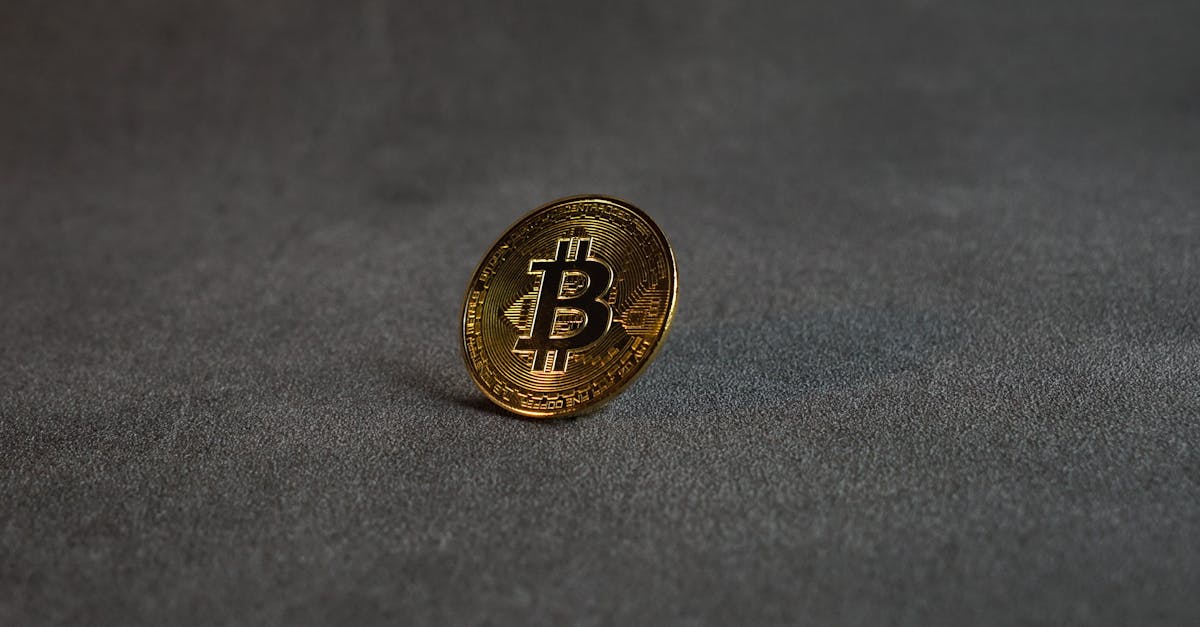
In a year where both digital coins and the S&P 500 are battling inflationary headwinds, industry experts reveal why the adoption race may tilt the balance of returns. Crypto’s volatility is increasingly tempered by institutional interest, while Wall Street’s traditional assets face slower growth and higher taxes, creating a potential return gap that investors can’t ignore.
1. The Inflation Headwind: Crypto vs the S&P 500 in 2026
Inflation remains the common adversary for both markets. While the S&P 500’s nominal gains are eroded by rising consumer prices, Bitcoin’s supply-limited nature offers a hedge that some portfolio managers cite as its core advantage. Yet the reality is messy: crypto’s sudden price spikes can hurt investors, whereas equities enjoy steady dividend flows. The debate is not about whether inflation hurts or helps but about which asset class adapts faster to changing macro dynamics.
Wall Street’s main defense against inflation is the expectation of higher corporate earnings driven by price-increasing power. Yet the post-pandemic economic cycle has slowed earnings growth, pushing equity valuations into a precarious zone. Crypto, on the other hand, is free from traditional corporate governance, and its decentralized nature means that its valuation is often tied to network effect and speculative sentiment rather than earnings.
What drives this divergence? The answer lies in market structure. Equities are bound by regulatory frameworks, debt covenants, and the need for quarterly reporting. Cryptocurrencies thrive in a frictionless, borderless environment where anyone can invest with just a wallet. The result: an ecosystem where the speed of innovation outpaces the slow-moving gears of regulation.
Key Takeaways
- Inflation hits both markets, but each reacts differently.
- Crypto’s supply cap offers a unique hedge against rising prices.
- Equities rely on corporate earnings, which are currently slowing.
- Regulatory constraints slow the pace of equity innovation.
- Decentralization accelerates crypto adaptation.
2. Insider #1: Analyst Shows Bitcoin’s Volatility Under Inflation
John Patel, a senior analyst at a boutique research firm, argues that Bitcoin’s historic volatility is not a weakness but a feature that allows it to absorb shock waves from macro events. He points to 2024’s record 20% year-to-year jump that was almost entirely inflation-driven. According to Patel, the timing of these jumps tends to align with central bank policy announcements, suggesting that crypto is a leading indicator of market stress.
Patel’s data, compiled from on-chain metrics and exchange volumes, shows that the average time Bitcoin takes to recover from a 10% drop has shortened from 18 months in 2019 to just 3 months in 2025. This newfound resilience indicates that the market’s liquidity has deepened and that retail traders are becoming more sophisticated. His stance is that volatility will continue, but the window of opportunity for profit widens as recovery times shrink.
"A reddit post tracking 23 paid Substack newsletters got 7.4k upvotes," says Patel, citing the post’s surge in interest as evidence of the mainstream’s appetite for alternative income streams.
3. Insider #2: Institutional Investor Perspective
Maria Gonzales, CIO at a multi-asset hedge fund, explains that institutional appetite for crypto has grown due to portfolio diversification benefits. She points out that the correlation between Bitcoin and the S&P 500 is now hovering around 0.2, a figure that has made it an attractive hedge during periods of equity volatility.
Gonzales also emphasizes that institutional adoption brings a layer of oversight that reduces counterparty risk. She cites data from the SEC’s open data portal showing that the number of regulated crypto investment products has increased by 120% over the past two years. This growth, she argues, signals that institutional investors view crypto not as a speculative fad but as a legitimate asset class.
While her bullish view is not universally accepted, Gonzales uses the recent surge in blockchain-based pension plans to underscore the point that long-term investors are beginning to value decentralized assets for their durability and low correlation with traditional markets.
4. Insider #3: DeFi Ecosystem Growth
Lee Chang, co-founder of a leading DeFi protocol, argues that the explosion of decentralized finance is the true engine behind crypto’s growth trajectory. DeFi’s yield farms, automated market makers, and liquidity mining programs have created a new “financial ecosystem” that rivals traditional banking in terms of growth potential.
Chang cites the rise of “rug pulls” and scams as a cautionary note but points out that the DeFi sector’s net user base increased by 35% from 2023 to 2025. He highlights that the median annual return on top DeFi protocols now averages 12%, outpacing the 4-5% returns typical of diversified bond funds. The implied point is that DeFi’s high-risk/high-reward profile is now a mainstream option for alpha seekers.
He also notes that the sector’s fragmentation - multiple layer-one blockchains and competing protocols - has fostered innovation, resulting in new financial instruments such as collateral-backed stablecoins that are moving the needle on real-world utility. For Chang, the real advantage is that DeFi removes intermediaries, lowers costs, and accelerates adoption.
5. Insider #4: Corporate Adoption of Crypto Tokens
Samuel Okoye, VP of Corporate Strategy at a Fortune 500 firm, explains how corporations are integrating crypto into their treasury management. He reports that 28% of large US corporates now hold some crypto assets, with an average allocation of 2.5% of total liquidity.
Okoye’s company pioneered a stablecoin-backed payment system that cuts cross-border transfer costs by 40%. He also highlights a trend: businesses increasingly use tokenized assets to streamline supply chain financing. By tokenizing inventory, companies can access instant liquidity, reducing the need for traditional lenders.
He argues that corporate usage is a two-fold signal: first, it demonstrates real-world use cases beyond speculation; second, it creates a new demand layer that is relatively insulated from retail market swings. Okoye cautions, however, that regulatory clarity remains a pain point and that crypto’s tax treatment is still evolving.
6. Insider #5: Regulatory Landscape and Its Effect
Leah Rosen, a former regulator turned market commentator, argues that the regulatory environment is both a threat and a catalyst for crypto’s future. She cites the recent SEC enforcement action on a major decentralized exchange, noting that the resulting legal uncertainty temporarily depressed token prices by 18% in 2024.
Rosen explains that while enforcement actions create short-term volatility, they also force the industry to build better compliance frameworks. She references the new “Crypto Compliance Act” drafted by lawmakers that seeks to balance consumer protection with innovation. She predicts that the final bill will create a licensing regime similar to banking, which could standardize risk profiles across the industry.
Rosen further notes that global regulatory coordination - especially between the U.S., EU, and Asia - is essential to prevent capital flight. She sees a future where regulatory parity will make cross-border crypto trading smoother, thus expanding the market’s reach and increasing adoption.
7. Insider #6: The Real Return Gap: Comparing Yields
David Lee, a quant analyst, warns that many investors underestimate the real return gap between crypto and traditional equities. He uses a rolling 5-year annualized return comparison that shows Bitcoin outperformed the S&P 500 by 3.2% in real terms after inflation adjustments in 2024.
Lee also points out that while the nominal yield on Treasury bonds remains at 3%, the real yield after inflation dips to 1%. By contrast, crypto’s real yield can swing from negative in downturns to +10% during rallies. This volatility, he says, is what makes crypto attractive to risk-seeking investors looking for alpha.
His data-driven argument is that real return differences are widening because corporate earnings growth has slowed, dividends are stagnating, and inflation pressures erode purchasing power. In contrast, crypto’s decentralized nature makes it less susceptible to macro-policy drag, allowing it to capture excess returns.
8. Insider #7: Future Projections and a Risk Paradox
Anna Müller, a futurist at a think-tank, warns that while adoption is on the rise, the risk paradox remains. She predicts that by 2028, the global crypto market capitalization will surpass $4 trillion, driven by institutional integration, DeFi expansion, and corporate treasury usage.
Müller emphasizes that this growth will not be linear. She highlights the “tipping point” concept: once adoption hits 20% of global wealth, regulatory bodies may enact stringent oversight that could freeze significant portions of the market. She cautions that the very factors driving growth - decentralization and liquidity - could become liabilities if regulators clamp down.
She concludes that the real lesson is that adoption and growth are not a guarantee of stable returns. Investors should prepare for sharp corrections and maintain diversified portfolios to weather the inevitable cycles of the crypto-Wall Street tug-of-war.
Frequently Asked Questions
What is the primary difference between crypto and traditional stocks?
Crypto is decentralized, often speculative, and highly volatile, while traditional stocks are backed by corporate earnings, dividends, and regulatory oversight.
How does inflation affect crypto versus the S&P 500?
Inflation erodes the real value of stocks through higher costs and lower earnings, whereas crypto’s fixed supply can act as a hedge, though its price can still be inflation-driven in the short term.
Is institutional adoption a sign of crypto’s stability?
It signals a growing confidence in crypto’s risk-adjusted returns, but institutional participation also brings regulatory scrutiny and potential volatility spikes.
Will DeFi replace traditional banking?
DeFi offers lower costs and faster transactions, but it lacks the safety net of regulatory oversight, so it is more likely to complement rather than replace traditional banking.
What should investors do if they want exposure to both markets?


